
Conservative & Medical Treatments (First Line)
Lifestyle and Dietary Modifications:
-This includes dividing food into small meals, chewing food thoroughly, and avoiding eating 2 to 3 hours before bedtime.
-It is also recommended to elevate the head of the bed by 15 cm and avoid triggers such as citrus fruits, fats, caffeine, and smoking.
-Medical Treatment: Involves the use of Proton Pump Inhibitors (PPIs) such as omeprazole and esomeprazole, in addition to H2 Blockers to reduce acid secretion.

Surgical and Corrective Procedures
When medications are ineffective and significantly impact quality of life, the following surgical options are available:
-
Roux-en-Y Gastric Bypass (RYGB): The optimal and most effective solution for treating severe reflux after a sleeve gastrectomy. The sleeved stomach is converted into a very small pouch and connected directly to the intestine, which significantly reduces acid secretion and prevents bile reflux.
-
Hiatal Hernia Repair: Reflux is often associated with a hiatal hernia caused by increased intra-abdominal pressure. Therefore, the hernia is surgically repaired, and the natural valve is reconstructed to enhance the mechanical efficiency of the lower esophagus.
-
Hill Repair Technique: A surgical procedure focused on repositioning and readjusting the anatomy at the gastroesophageal junction to increase sphincter pressure without the need for gastric fundoplication.

Modern Technologies and Innovations
These methods are used in specific cases to avoid major procedures, but they require careful patient evaluation before reliance:
-
LINX System: A flexible magnetic titanium ring implanted around the lower esophagus laparoscopically. It allows food to pass during swallowing and then closes magnetically to prevent acid backflow.
-
Stretta Procedure (Radiofrequency Treatment): A non-surgical transoral endoscopic technique where thermal energy is delivered to strengthen the lower esophageal sphincter and improve its function.
-
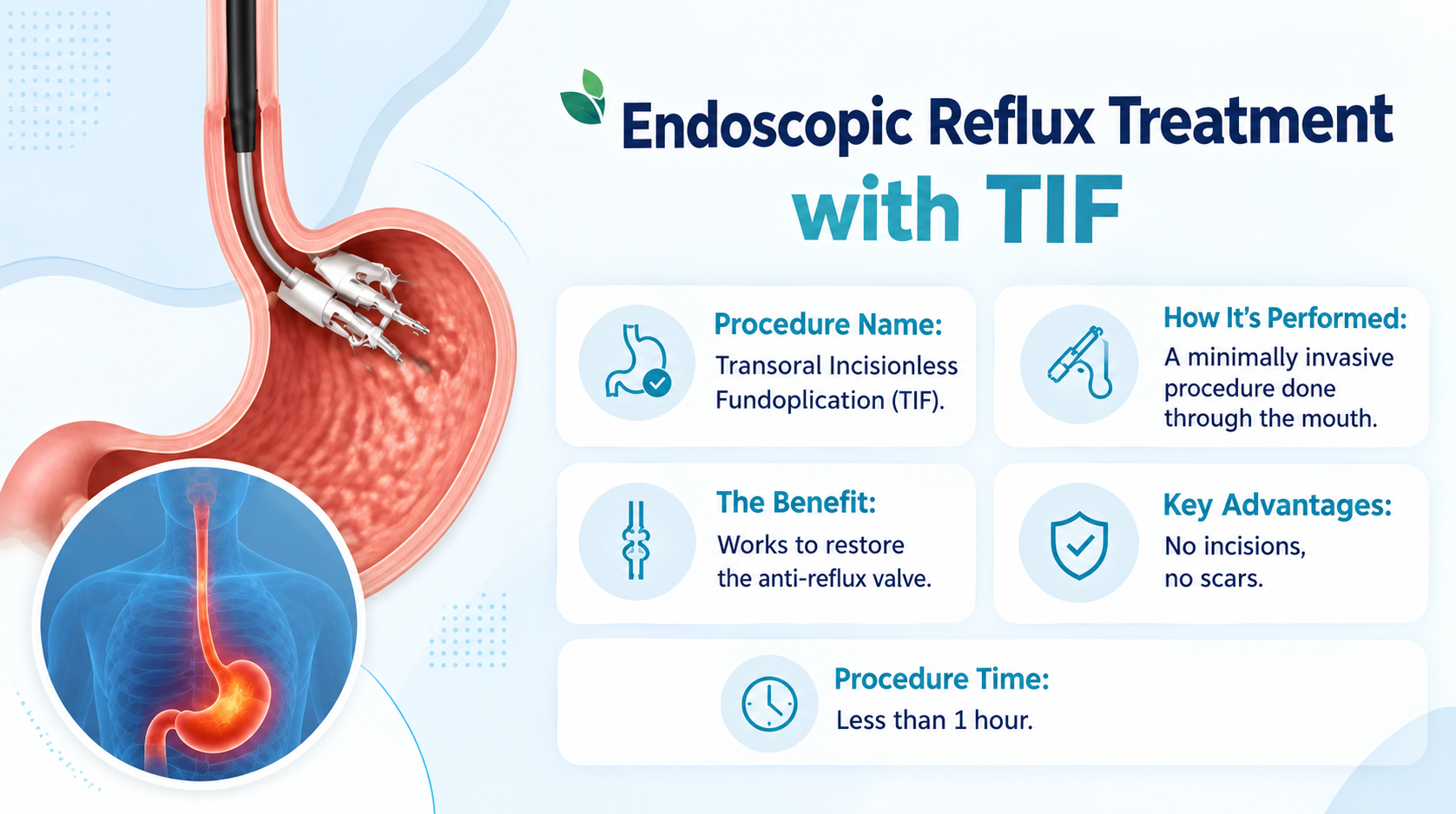
Transoral Incisionless Fundoplication (TIF): A modern technique aimed at effectively treating GERD without the need for surgical incisions. This procedure is performed by inserting small surgical instruments transorally (through the mouth).